
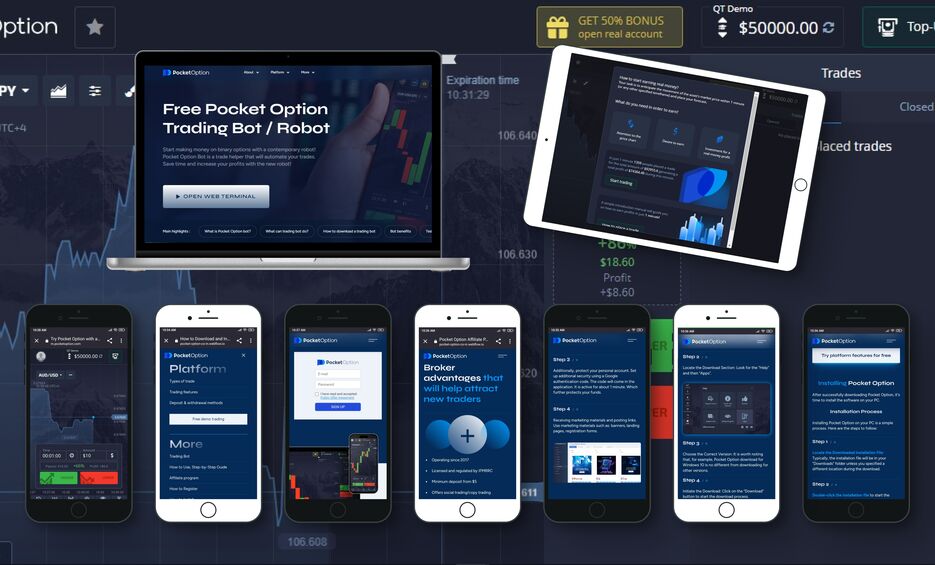
Indicators are essential tools in the trading ecosystem, providing valuable insights that can significantly enhance your trading experience. For traders utilizing the Indicators Pocket Option Pocket Option indicators, mastering these tools can lead to informed decisions and increased profitability. This article will delve into the various types of indicators available on Pocket Option, how they function, and strategies to implement them effectively for successful trading.
Understanding Pocket Option Indicators
Indicators are mathematical calculations based on the price, volume, or open interest of a security. They are used to predict future price movements and assist traders in decision-making. In the context of Pocket Option, indicators play a crucial role in technical analysis, helping traders identify trends, potential market reversals, and entry or exit points.
The Pocket Option platform offers a variety of indicators that cater to different trading strategies, from scalping to long-term investing. Some of the key types of indicators include trend indicators, momentum indicators, volatility indicators, and volume indicators.
Types of Indicators on Pocket Option
1. **Trend Indicators**
Trend indicators are used to identify the direction of the market trend. They help traders understand whether an asset is in an uptrend, downtrend, or sideways movement. Common trend indicators available on Pocket Option include:
– **Moving Averages (MA)**: This indicator smooths out price data to identify the direction of the trend. Traders often use the Simple Moving Average (SMA) and Exponential Moving Average (EMA) for short-term and long-term analysis.
– **Average Directional Index (ADX)**: The ADX helps traders measure the strength of a trend. Values above 20 typically indicate a strong trend, while values below suggest a weak or non-existent trend.
2. **Momentum Indicators**
Momentum indicators measure the speed of price movements and can indicate whether an asset is overbought or oversold. Some popular momentum indicators include:

– **Relative Strength Index (RSI)**: The RSI is a widely-used momentum oscillator that ranges from 0 to 100. Traders often look for readings above 70 to indicate overbought conditions and below 30 for oversold conditions.
– **Stochastic Oscillator**: This indicator compares a specific closing price of an asset to a range of prices over a period, helping traders identify potential reversal points.
3. **Volatility Indicators**
Volatility indicators assess the degree of price variation over a period. High volatility can indicate riskier trades, while low volatility usually suggests a more stable market. Key volatility indicators include:
– **Bollinger Bands**: This indicator consists of a middle band (the moving average) and two outer bands that represent price volatility. When prices touch the upper band, it may indicate overbought conditions, while touches on the lower band could indicate oversold conditions.
– **Average True Range (ATR)**: The ATR measures market volatility by decomposing the entire range of an asset for that period. Traders use ATR to set stop-loss levels and assess potential price swings.
4. **Volume Indicators**
Volume indicators help traders analyze the strength of price movements based on trading volume. High volume often confirms trends, while low volume might raise concerns about the reliability of the price movement. Important volume indicators include:
– **On-Balance Volume (OBV)**: This cumulative indicator uses volume flow to predict changes in the price of an asset. A rising OBV indicates that buyers are willing to step in and push the price upwards.
– **Accumulation/Distribution Line**: This indicator helps assess the overall direction of price movement based on volume flow. A rising A/D line indicates accumulation (buying pressure), while a falling A/D line signals distribution (selling pressure).
How to Use Indicators Effectively

While indicators provide valuable insights into market conditions, it is crucial to know how to use them effectively to make informed trading decisions. Here are some strategies to maximize your trading efficiency with Pocket Option indicators:
1. **Combine Different Indicators**
One of the most effective strategies is to use multiple indicators in conjunction with each other. For example, a trader might combine a trend indicator like the Moving Average with a momentum indicator like the RSI. This approach helps confirm signals and reduces false positives.
2. **Adjust Settings Based on Timeframes**
Different trading strategies require different timeframes. A day trader might use shorter settings for moving averages to catch quick price movements, while a swing trader might prefer longer settings to analyze broader trends. Understanding how to adjust indicator settings based on your trading style is vital.
3. **Recognize Divergences**
Divergences between price and indicators can provide early warning signs of potential reversals. For instance, if prices are making new highs while the RSI shows lower highs, this negative divergence might indicate a weakening trend. Recognizing these patterns can be crucial for traders looking to enter or exit positions.
4. **Use Indicators for Entry and Exit Signals**
Establish clear criteria for entering and exiting trades based on your chosen indicators. For instance, use the crossover of a short-term moving average above a long-term moving average as a buy signal, and the opposite crossover as a sell signal. Consistent application of these criteria can help remove emotional decision-making.
Conclusion
In the fast-paced world of trading, utilizing indicators effectively on Pocket Option can significantly enhance your trading strategy and decision-making processes. By understanding various types of indicators—including trend, momentum, volatility, and volume indicators—and knowing how to implement them, traders can gain a competitive edge in the market.
Remember, while indicators can offer valuable insights, they are not foolproof. Always consider market conditions, use proper risk management strategies, and continually educate yourself to refine your trading approach. With practice and experience, you can harness the power of Pocket Option indicators to create a successful and profitable trading journey.
