
Smaller churches won’t need an accountant on staff, so you can hire a freelance accountant or contact a local business to create these reports quarterly or annually. While your church may not be required to file a 990 with the IRS, properly tracking and reporting your income can help you build trust with your congregants and the rest of your community. It helps connect donors with the cause and inspires them to contribute. When raising funds for a church building, it’s important to tell the story of why the new building is needed and how it will benefit the community.

Work With a Dedicated Church Accountant
- We’ve highlighted all of the major differences in our comparison of QuickBooks® versus fund accounting for churches.
- Churches should be careful about how many designated funds are allowed at a time.
- Fund accounting is a way for churches to be financially responsible and transparent.
- Given the same scenario of having four checkbooks, the church has quadrupled the monthly work for the bookkeeper.
- FASB creates the Generally Accepted Accounting Principles(GAAP) guidelines.
- It’s no different than a for profit system where you need to know the credit and debit to code the transaction right.
We also defined what ‘purpose’ is in the context of fund accounting and how each purpose (mission) must have its four areas of accounts — assets, liabilities, income, and expenses. We then went over the reasons why multiple checking accounts, liabilities, and classes should never be used to replace funds. We hope by defining what fund accounting is, and what it is not, that you walk away with a better understanding of fund accounting. To maintain your tax-exempt status, fund accounting is required by the IRS to clearly show how funds are being used for the benefit of the community. It also builds transparency within the church accounting church and ensures accountability.
- For example, they want to see how much they brought in for the General fund for the last five years.
- The total revenue that came into the General fund is not always the exact amount that came in for donations.
- Whether it’s raising funds for a new building, managing a pension fund, or navigating government funding rules, churches need to be strategic and effective in their approach.
- This type of bookkeeping is too complicated to use an Excel file, so your church must purchase reliable accounting software to keep track.
- To ensure long-term success, establish clear best practices from the start.
- Were there any disbursements from the piano fund that wasn’t for the piano on the financial statements?
Can I earn CEU credit for taking Financial Management for Churches?
This separation is not found in a for profit system, thus they can’t report separately on various areas of their business. With churches they can report specifically on how certain missions, community outreach, and so on are doing by using funds. In the above picture representation the Youth, Building, and General fund would all have their own reports. Fund accounting allows the organization to convey to their donors how well they did with the latest fund drive. Fund accounting allows the church to show donors how they spent the money entrusted to the church for each mission’s function.
People love complexity
Other mistakes like #7, the church simply opens up another checkbook not realizing what that really means. Most of the time the church board is trying to solve an immediate need of keeping money separated and not looking at the long-term issues. When a person is reconciling the transactions within the accounting system to their bank statement, several irregularities can be corrected. A check written out for $120.00 but entered as $102.00, creates an $18.00 discrepancy. Automatic withdrawals- or EFT transactions could easily be missed along with bank interest and fees. To ensure accurate account balances, bank accounts must be reconciled.

Reporting and Analytics

Before computers, people would put money into envelopes as a way to budget. When using this budget method, you go to the grocery store with $150.00 cash, and you spend $140.00, leaving $10.00. When you come back home QuickBooks you wouldn’t put the $10.00 in the gas or dining out envelope. The leftover $10.00 would go in the grocery envelope (i.e. the fund). To ensure long-term success, establish clear best practices from the start.
The Importance of Church Funding
- Once an audit is started, the scope of it is almost limitless.
- The bookkeeper would have to reconcile all these checkbooks each month.
- Additionally, the Global Missions fund balance sheet will show the assets and liabilities.
- Another example of an inappropriate account designation is when making a loan payment and the transaction debits an expense account and credits the checkbook.
- It also requires specialized software and reporting systems to effectively manage and report on the financial activities of each fund.
“The time savings aren’t just about efficiency,” says Pastor Mike from City Life Church. “It’s about what we can do with those extra hours. We’re finally able to focus on ministry instead of spreadsheets.” Save 50% for 3 months with Code SPRING2025.No credit card required. For example, an interest expense maybe 5000 — a rent expense may be 5010 and so on.
This can be done through various mediums such as blog posts, social media posts, videos, or live performances. Fund Accounting for Marketing Agencies accounting in churches presents unique challenges due to the nature of their operations. Understanding and addressing these challenges is crucial for successful fund accounting. Here, we’ll explore common challenges and best practices in fund accounting to provide insight for church finance teams.
Tracking and Reporting on Multiple Funds
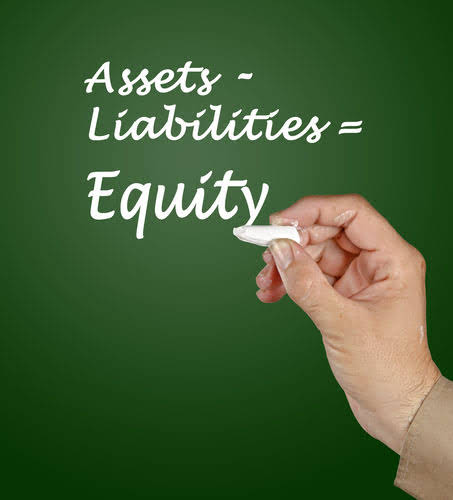
Worse yet, their equity accounts do not break down into these classes. Because of this, the balance sheet will never be right; balance sheets show assets and liabilities which are not covered by classes. Transactions within each fund are recorded separately, ensuring clear tracking of income and expenditures. Reports are then generated to provide insights into the financial health of each fund, including balance sheets, income statements, and cash flow statements.
